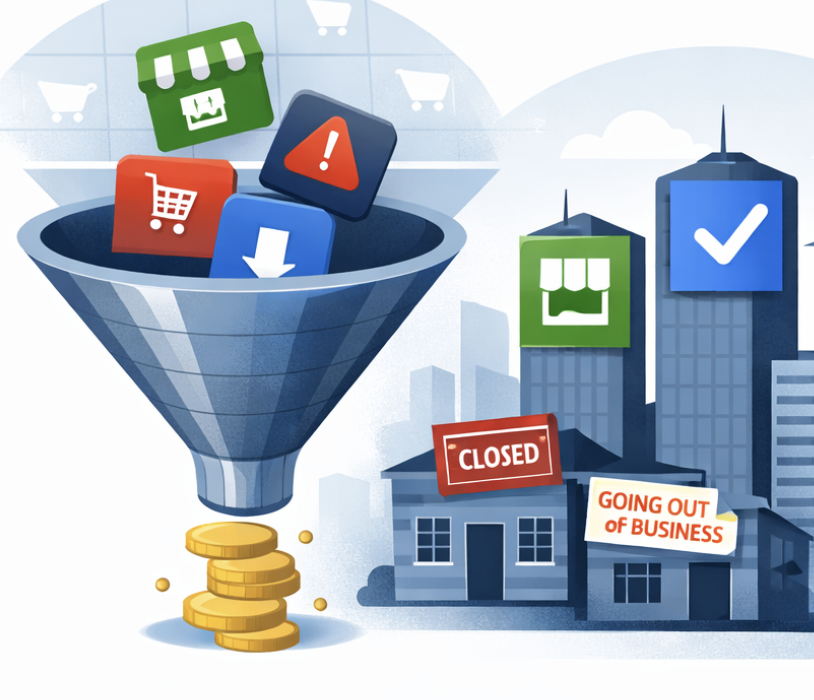
In the high-stakes world of e-commerce, operators often get caught in the siren song of topline revenue. High sales figures look great on reports, but they can mask a harsh reality: not all revenue is created equal, and certainly, not all channels contribute to your bottom line in the same way. As experienced operators know, the true measure of a channel’s value lies not in its gross sales, but in its net profitability.
This article cuts through the noise. We are moving beyond the vanity metric of revenue to focus on what truly drives sustainable business growth: profitability per channel. For marketplace sellers, e-commerce managers, and advertisers, understanding these distinctions is critical for making informed decisions about where to invest resources and how to scale effectively.
Table of Contents
- Why Revenue Alone is a Trap
- Key Profitability Metrics for Operators
- Comparing Channels: Marketplaces vs. Affiliate vs. Paid
- Common Mistakes Operators Make
- A Simple Profitability Framework for Any Company
- Frequently Asked Questions
- Conclusion
Why Revenue Alone is a Trap
Pure revenue numbers can be deceiving. A channel might generate impressive sales, yet carry such high costs that its net contribution is negligible or even negative. Think of it as a busy restaurant with high turnover but minimal profit because food costs are exorbitant, or staff is overpaid. For marketplace operators, these hidden costs include:
- High marketplace commissions and transaction fees
- Significant advertising spend required to stand out
- Specific fulfillment requirements that inflate shipping or packaging costs
- Higher return rates or customer service demands
- Penalties for non-compliance with platform rules
Without a clear understanding of these associated expenses, operators risk pouring resources into channels that are busy, but ultimately unprofitable. This isn’t just about financial loss; it diverts attention and capital from genuinely lucrative opportunities.
Key Profitability Metrics for Operators
To truly evaluate a channel, you need metrics that go beyond the sales ticker. Here are the core metrics every operator should master.
Cost Share: The True Burden
Cost share represents the percentage of your gross revenue that is consumed by direct channel-specific costs. It’s calculated as: (Total Channel Costs / Gross Channel Revenue) * 100. This metric immediately tells you how “expensive” a channel is relative to the revenue it generates. A channel with 30% cost share means 30 cents of every dollar earned goes directly to operating that channel. This high-level view helps identify channels that might be disproportionately draining resources.
ROI: Your Investment’s Return
Return on Investment (ROI) in a channel context measures the efficiency of your marketing and operational spend. It’s calculated as: (Net Profit from Channel / Total Investment in Channel) * 100. A strong ROI indicates that your capital is being used effectively to generate returns. For e-commerce, ensure ‘Total Investment’ includes all direct costs: platform fees, advertising, fulfillment, and any specific discounts. It’s a direct indicator of whether your channel is a good financial play.
Contribution Margin: What’s Left for the Business
The contribution margin is perhaps the most powerful metric for channel profitability. It represents the revenue left over from sales after deducting all variable costs directly associated with producing and selling a product through a specific channel. This remaining margin is what contributes to covering your fixed costs and ultimately generates your net profit.
The calculation is straightforward: Channel Revenue - (Cost of Goods Sold + Channel Fees + Channel-Specific Advertising + Channel-Specific Fulfillment Costs + Returns/Refunds).
This metric provides a clear picture of how much each sale through a given channel contributes to your overall business health. It’s the ultimate metric for comparing the true value of different sales avenues.
Comparing Channels: Marketplaces vs. Affiliate vs. Paid
You cannot compare channels directly using only revenue or even ROAS. Each channel type has distinct cost structures and operational demands that impact profitability. An operator needs a consistent framework.
- Marketplaces (e.g., Amazon, Etsy, Walmart): High commissions, fulfillment fees (FBA/WFS), mandatory advertising spend, return policy compliance, and competition often drive down per-unit margin. The trade-off is often vast audience reach.
- Affiliate Channels: Driven by commissions on sales generated by affiliates. Costs are directly tied to performance, but you also factor in affiliate platform fees and potential clawbacks for returns. Brand control can be lower.
- Paid Channels (e.g., Google Ads, Meta Ads): Direct ad spend (CPC, CPM), potentially agency fees. While highly controllable, competition can escalate costs, and the customer acquisition cost (CAC) needs careful monitoring against lifetime value.
The key is to normalize your profitability metrics. Use the contribution margin for each channel. This allows you to evaluate them on an equal footing, regardless of their inherent operational models.
Common Mistakes Operators Make
Even seasoned operators can fall into these traps when evaluating channel performance:
- Ignoring True Fulfillment Costs: Overlooking the specific packaging, labor, or shipping rates tied to a particular marketplace’s requirements. These can significantly erode margins.
- Underestimating Returns and Refunds: Not factoring in the full cost of returns, including processing, restocking, shipping, and potential product damage for a given channel. Some channels have significantly higher return rates.
- Attributing All Ad Spend to Revenue: Assuming all sales from a channel are solely due to its advertising spend. Organic sales on marketplaces, for example, can inflate perceived ad efficiency if not carefully segmented.
- Failing to Account for Internal Labor: Channels requiring significant manual intervention (e.g., specific listing optimizations, extensive customer service unique to that platform) carry an internal labor cost that should be considered.
- Short-Term Thinking: Pulling the plug too quickly on a channel without optimizing, or conversely, continually investing in a low-profit channel due to historical attachment or “brand presence” vanity.
A Simple Profitability Framework for Any Company
Implementing a clear, repeatable framework is paramount. Here’s a pragmatic approach:
- Identify All Revenue Streams Per Channel: Gross sales, any additional service revenue unique to that channel.
- Determine Product-Level COGS: Start with the direct cost of goods sold for each product.
- List All Channel-Specific Variable Costs:
- Marketplace commissions and transaction fees
- Channel-specific advertising spend (PPC, sponsored listings)
- Fulfillment costs (shipping, warehousing specific to channel, packaging)
- Payment processing fees specific to the channel
- Returns and refund costs (actual loss, processing fees)
- Customer service costs unique to the channel’s demands
- Any specific discounts or promotions run solely for that channel
- Calculate Gross Profit Per Product:
Product Revenue - COGS. - Calculate Channel Contribution Margin Per Product:
Gross Profit Per Product - Sum of all Channel-Specific Variable Costs. - Aggregate for Total Channel Contribution Margin: Sum up the contribution margin across all products sold through that channel over a specific period (e.g., monthly or quarterly).
- Benchmark and Decide: Compare the channel contribution margins. Which channels are truly profitable? Which are underperforming? Use this data to inform strategic decisions on scaling, optimizing, or potentially sunsetting channels.
This framework pushes you past the illusion of revenue and into the reality of sustainable profit.
Frequently Asked Questions
How often should I review channel profitability?
For most operators, a monthly or quarterly review is sufficient to identify trends and make timely adjustments. However, in periods of rapid growth or significant promotional activity, a more frequent, even weekly, pulse check can be beneficial.
Should I cut a channel if its profitability is low?
Not necessarily. Low profitability signals a need for optimization. Investigate specific cost drivers. Can you reduce ad spend, negotiate fees, improve product listings to reduce returns, or streamline fulfillment? Only consider cutting a channel if optimization efforts prove fruitless and it consistently drains resources that could be better allocated elsewhere. Sometimes, a channel serves a strategic purpose (e.g., brand awareness) that justifies a lower profit margin, but this should be a conscious, data-backed decision, not an assumption.
How do internal labor costs factor into channel profitability?
While often treated as fixed overhead, if a channel demands significantly more specific labor hours than others (e.g., dedicated staff for platform-specific content creation, unique customer support needs), it is prudent to allocate a proportional labor cost to that channel. This provides a more accurate picture of its true operational expense and allows for better comparison against less labor-intensive channels.
Conclusion
The transition from a revenue-centric mindset to a profitability-first approach is not merely an accounting exercise; it’s a fundamental shift in operational strategy. By diligently applying metrics like cost share, ROI, and critically, contribution margin, e-commerce operators can move beyond surface-level performance indicators. This empowers you to make data-driven decisions that foster genuine, sustainable growth, ensuring that every channel you operate is not just generating sales, but actively contributing to your bottom line.
Focus on profit, not just popularity. Your business will thank you.