

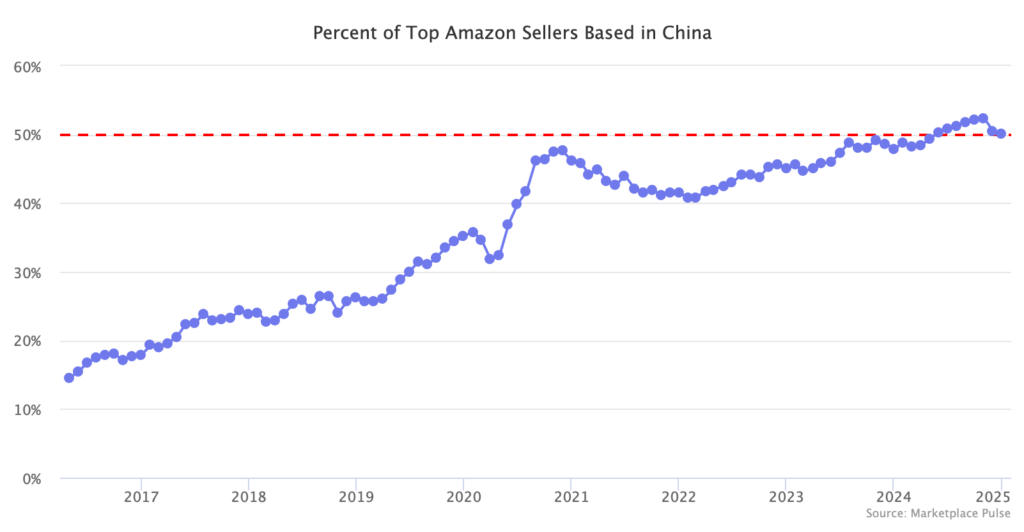
In 2024, China-based sellers officially took the majority share on Amazon, surpassing 50% of the marketplace’s top sellers, according to a research. This milestone marks a significant shift in the e-commerce landscape, raising questions about competition, quality control, and the future of American sellers.
The Rise of Chinese Sellers on Amazon
While American sellers have been below the 50% mark for nearly two years, Chinese sellers have steadily grown to fill the gap. Marketplace Pulse data indicates that as of late 2024, Chinese sellers represent over half of the top-performing sellers on Amazon.com, with U.S. sellers accounting for approximately 45%, and the remaining percentage scattered among sellers from the U.K., Canada, and other countries. The actual U.S. seller share may be even lower, as many international sellers register their businesses in the United States to appear as domestic.
Amazon formally acknowledged this shift in its February 2024 annual Form 10-K filing with the SEC, referring to the Chinese seller presence as “significant.” However, this trend has been building for nearly a decade across Amazon’s U.S. and global marketplaces.
Amazon Haul: A New Frontier for Chinese Sellers
In November 2024, Amazon launched Amazon Haul, a dedicated section aimed at allowing consumers to purchase products directly from Chinese sellers. Despite being an experimental initiative, it quickly gained traction. By December, Amazon heavily promoted it with subsidies offering up to 60% discounts, mirroring the popular Chinese platform Temu. According to Marketplace Pulse, 100% of Amazon Haul sellers are based in China, signaling a clear strategic push to cater to price-conscious shoppers.
While Amazon Haul thrives, there remains no dedicated “Made in America” section on Amazon, underscoring the retailer’s focus on Chinese products. Interestingly, many Chinese sellers are now diversifying their manufacturing bases to countries like Vietnam to mitigate tariff concerns and avoid geopolitical tensions.
The Broader Impact on American Sellers
The rapid rise of Chinese sellers on Amazon presents several challenges for U.S.-based businesses, including:
- Increased Competition: Lower prices and aggressive marketing strategies from Chinese sellers make it harder for American businesses to compete.
- Quality Control & Counterfeiting: Concerns over product quality and counterfeit goods persist, with regulatory oversight struggling to keep pace.
- Economic Impact: The dominance of Chinese sellers affects local jobs, tax revenues, and small business viability in the U.S.
Despite these challenges, Amazon continues to support Chinese sellers due to their ability to offer a direct-to-consumer model with lower operational costs. The platform earns the same fees from sellers regardless of their origin, prioritizing revenue over seller nationality.
Walmart Following Suit
Amazon is not the only platform seeing this shift. Walmart, too, has witnessed an increase in Chinese sellers, rising from 20% to 30% within the past year. The trend suggests a broader movement in the e-commerce industry towards direct sourcing from Chinese suppliers.
The Road Ahead
For American sellers, adapting to this new reality will require innovation, strategic pricing, and a focus on brand differentiation. Efforts such as improving customer service, leveraging unique selling propositions, and capitalizing on the “Made in the USA” sentiment may provide a competitive edge.
As Amazon’s marketplace continues to evolve, stakeholders across the supply chain must navigate these changes to sustain their position in the highly competitive global market.


